Objective
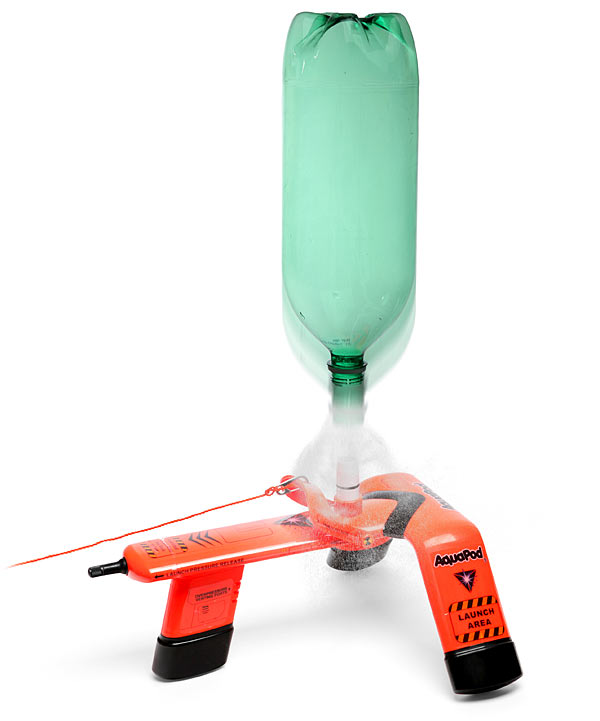
Our objective was to build a rocket out of a 2 liter soda bottle that would successfully launch into the air. When it was in the air, it needed to be able to deploy an egg that we stored in the rocket so that the egg would land safely without damage.


Materials
These are the materials we used during our construction of the bottle rocket:
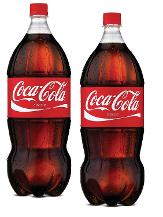
2 2-liter soda bottles
Construction Paper
Cardboard
Rope/Yarn
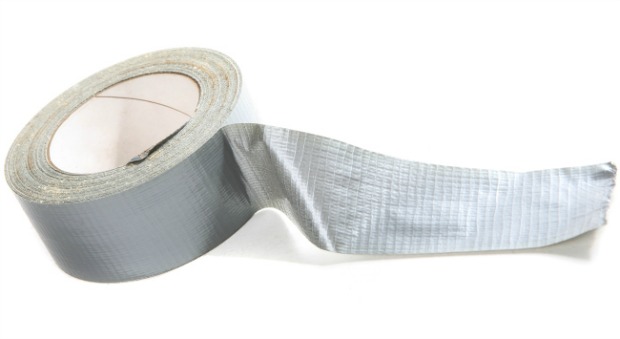
1 roll of duct tape
Something to make a parachute out of
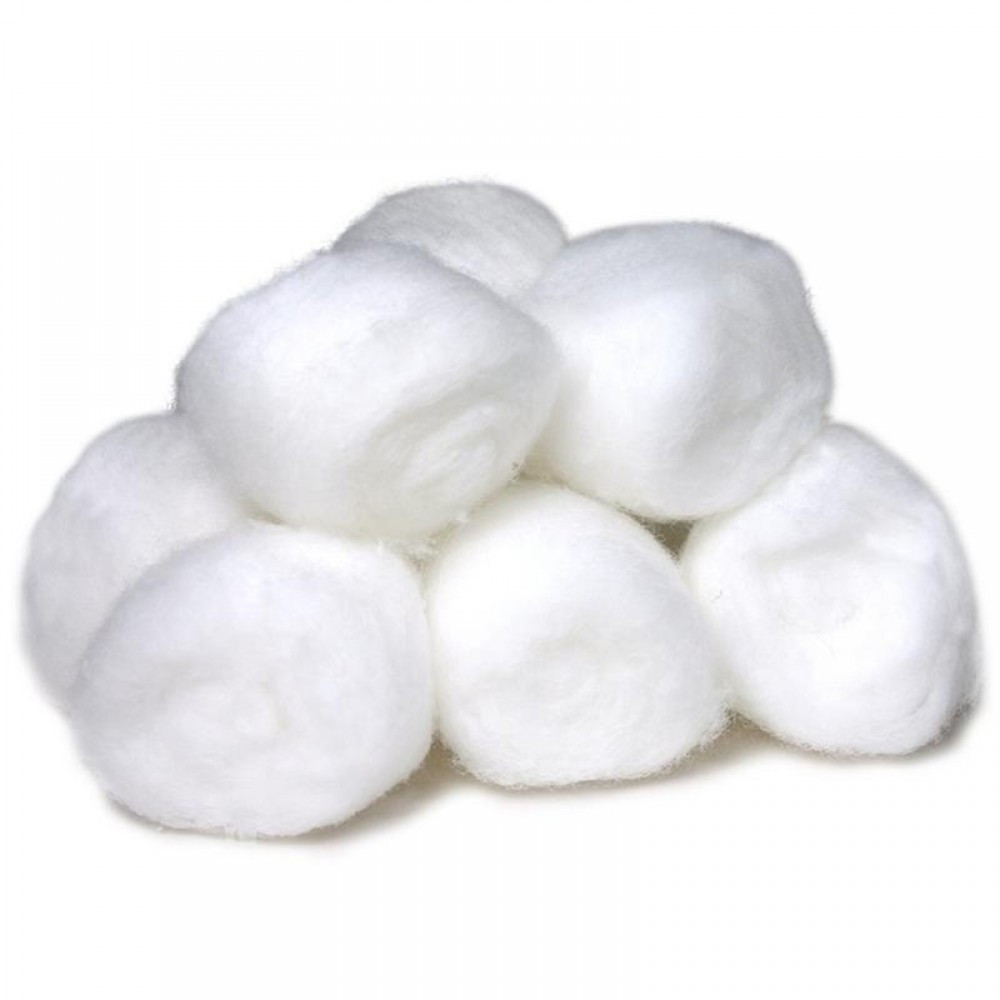
Cotton
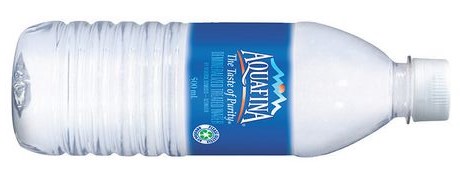
1 regular sized water bottle
1 hot glue gun
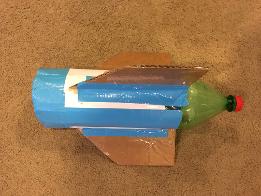
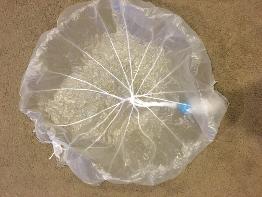
Procedures
These are the steps we took in making our rocket:
The body:
- Wrap a piece of construction paper around a 2 liter bottle and tape it down.
- Move the construction paper so that it is sticking up 2-3 inches above the top of the bottle.
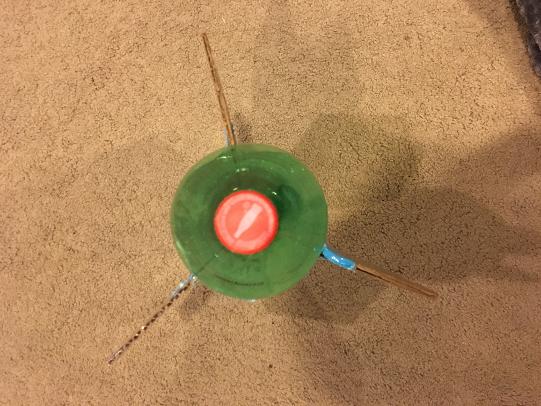
- Cut out the fins of your rocket from cardboard. Glue these on to the rocket.
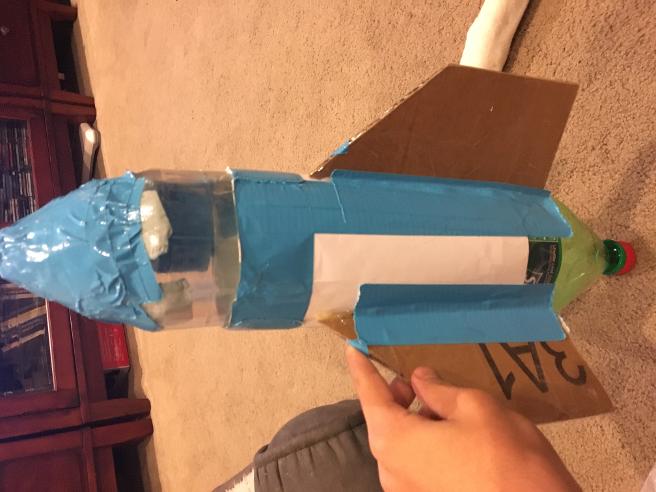
- Using the second 2 liter bottle, make a cone by cutting the top third of the bottle. Use duct tape to form a more cone-like shape.
- Tape a side of the cone to a side of the body of the rocket. This should allow the cone of the rocket to open easily.
The capsule:
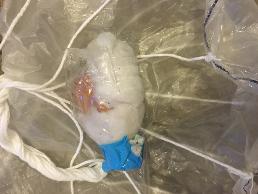
- Cut the top of the water bottle (about a third of it) and put the egg inside.
- Stuff the capsule with cotton to provide padding for the egg.
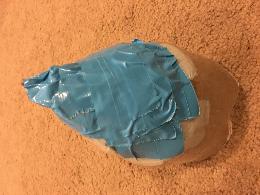
- Use duct tape to seal the capsule shut so the egg does not accidentally fall out of the capsule.
The parachute:
- With whatever material you use for your parachute, cut out a circular shape.
- Make numerous holes on the perimeter of the circular cut out.
- Use yarn to attach the parachute to the capsule.
Put the capsule with the parachute attached inside the cone of the rocket and the rocket is ready to go!
Pictures and Video
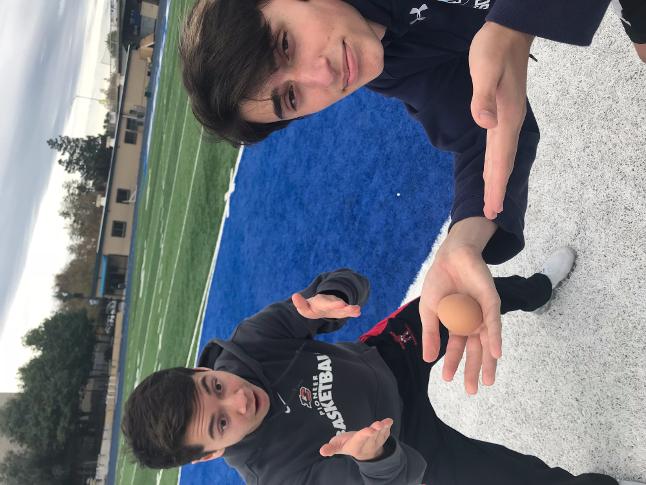
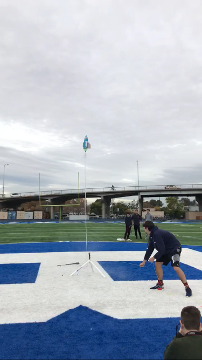
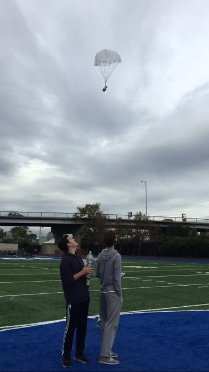
Results
Overall, our rocket was a success. From our two runs, the highest height we achieved was 75.5 feet! This surpasses our goal of 75 feet. Our greatest velocity was 10.7 m/s, and its interesting to note that the greater velocity was recorded in our run with a smaller launch distance. One out of the two runs successfully deployed the parachute with the egg. When deployed, the egg safely floated down to safety. It is also interesting to note that even though the parachute did not deploy during the first run, the egg still remained perfectly intact because of how well we packaged the rocket. According to Mrs. Roemer, one period did not have one successful egg; compared to these results, our rocket was a huge success. In our second run, there was a huge difference in height achieved by the rocket, and there are many reasons for this. One reason is that Joey accidentally tripped over the string before the rocket was ready for launch. This meant there was not as much pressure inside the bottle, thus minimizing the height. Also, between our two runs, we changed the design of the rocket so we could guarantee the egg would deploy. We changed it too much, however, and the cone fell of a bit prematurely which led to a smaller distance achieved. Finally, during our launch it was a bit windy which altered the performance of the rocket.
Calculations
For the following calculations, it is important to note we are using our launch with the unsuccessful deployment of the egg. We are using the first launch because we have a more precise video that allowed us to achieve better data. We were not able to get our second launch completely on film as Joey accidentally prematurely launched it and there was not time for another launch.
Some Data:
Time to accelerate: 0.23 s
Time to reach apogee after fuel exhaustion: 1.77 s
Time to reach ground from apogee: 3.53 s
Maximum velocity: 9.8 m/s
Mass: 1.5578 kg
NOTE: Maximum velocity is not accurately recorded. Any calculations that incorporate maximum velocity will be inaccurate.
Acceleration
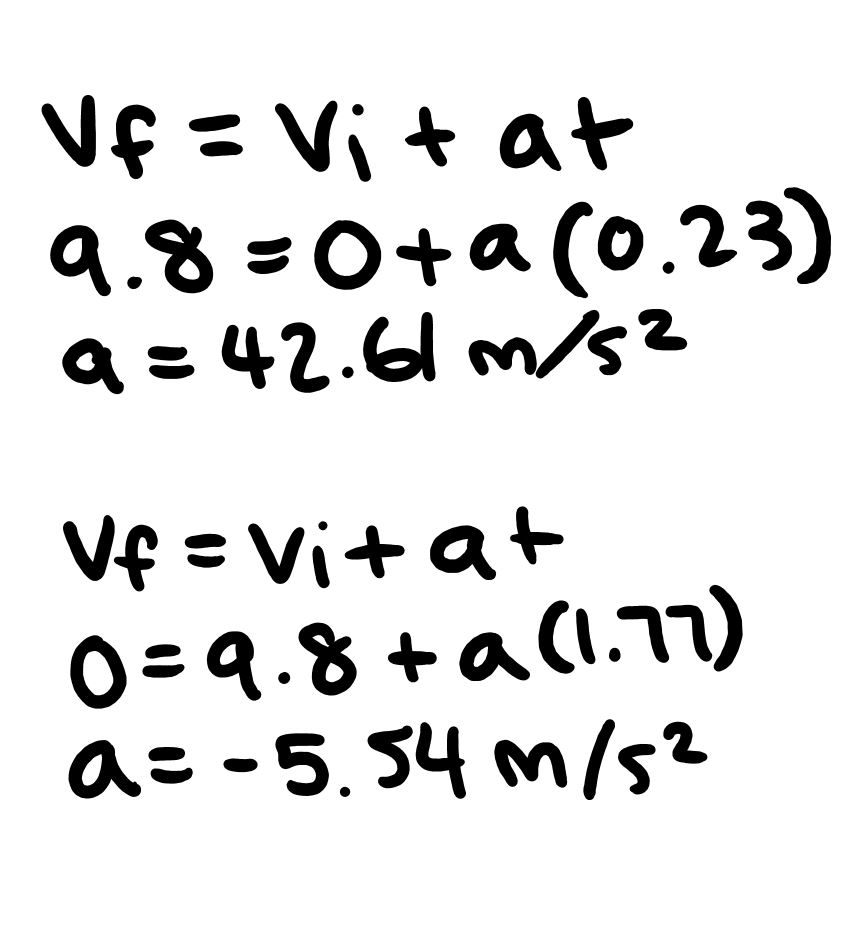
There are two different values of acceleration that need to be calculated: acceleration during thrust, and acceleration after thrust.
In the launch, the time in which it took the rocket to accelerate with thrust was around 0.23 seconds. Along with the maximum velocity of 9.8 m/s, we were able to calculate the acceleration during this time which was 42.61 m/s^2.
The time in which it took the rocket to reach apogee after fuel exhaustion was 1.77 s. Using 9.8 m/s as our initial velocity, we were able to calculate the acceleration during this time which was -5.54 m/s^2.
Height
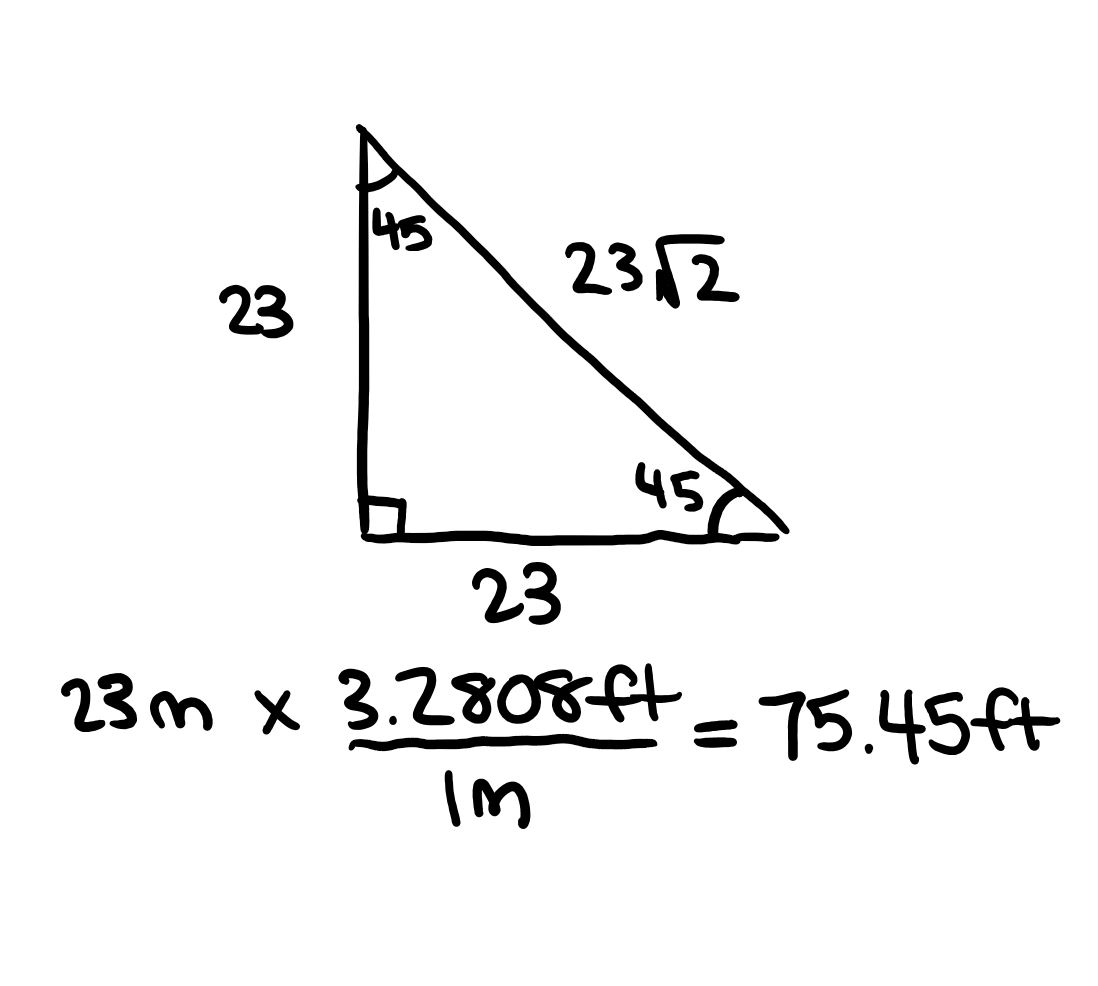
After the launch, it was recorded that our rocket launched 23 m away from its origin point. Also, the angle that was produced from the apogee was around 45 degrees. Since we assume that the rocket went straight up, we can make a right triangle and find the height the rocket achieved during the launch.
From our knowledge of 45-45-90 triangles, we know that the legs of this type of triangle have the same value. This means that our rocket achieved a height of 23 m and from dimensional analysis we know it achieved 75.45 feet.
Thrust
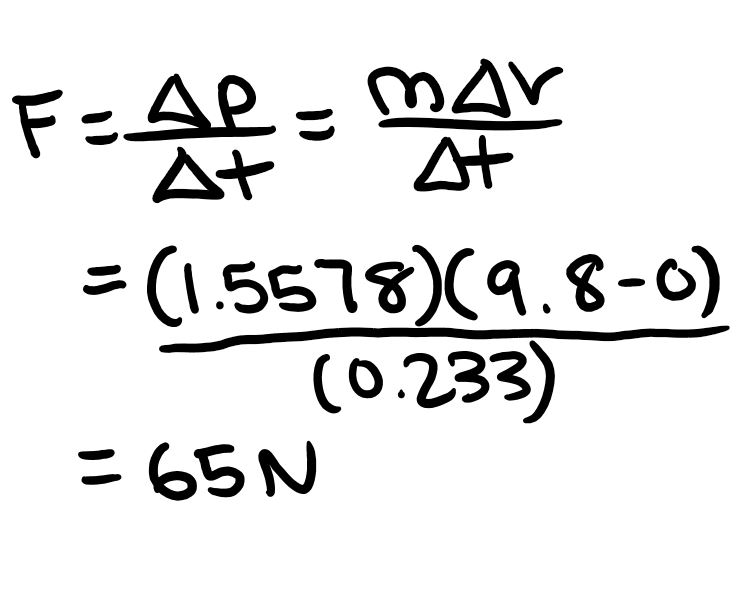
To calculate thrust, we first need the mass of the rocket. This turned out to be 1.5578 kg. To help with the calculation, we used the first time interval of acceleration (when there was thrust). We used divided impulse over time to calculate the force which was 65 N.
Free Body Diagrams
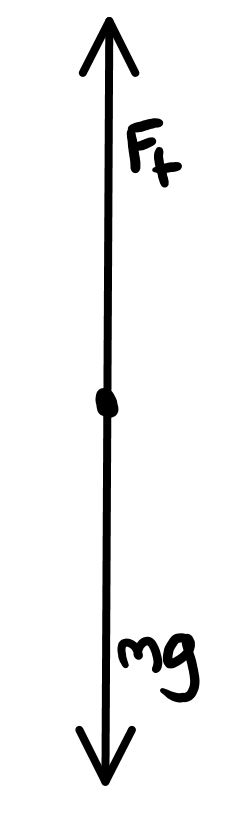
Diagram 1
This free body diagram represents the moment the rocket took off. In this scenario, there are two forces acting upon the rocket. The first is thrust force in the upward direction, which we already calculated to be 65 N. The second is weight in the downward direction, which is calculated by multiplying mass and gravity.
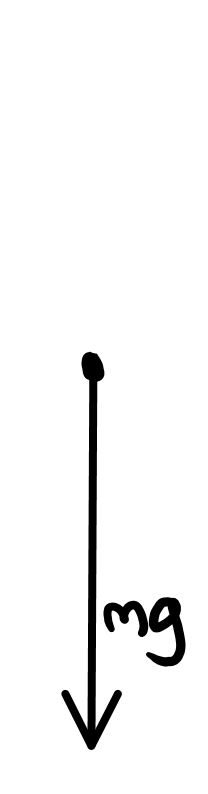
Diagram 2
This free body diagram represents the moment the rocket reaches its highest point. Because the rocket is about to fall down, there are no upward forces acting upon. There is only one force acting upon the rocket which is weight, calculated by multiplying mass and gravity.
Conclusion
Our rocket performed well in terms of staying in one piece throughout the launch, but it could have been better in the areas of launch height and the deployment of the parachute. During our first run, the height was sufficient, but our egg carrier did not fall out of the main piece of the rocket, therefore not allowing the parachute to deploy. In the second run, the parachute deployed but the height was not as high as the first test. During build, we could have performed a better use of duct tape, as there were some pieces that effected the parachute’s deployment and the rocket’s height. Some pieces were not flatly applied, which could have helped air resistance, therefore resulting in a lower height. Also, we could have added more weight (such as application of layers of duct tape) to one side of the egg carrier, as it would have helped that side tip the entire rocket over, resulting in easier deployment of the parachute. In the future if we were to perform the launch again, we would apply these changes states above. Overall, the changes would simplify the critical parts of and lead to a flawless launch.
